
Commercial Kitchen Trailer Rental for Industrial Crew Meals
An industrial construction or maintenance project can create a concentrated meal demand far from a permanent kitchen. A commercial kitchen trailer rental may be considered when the site can support the cooking operation, staff movement, and required utilities. Define crew size by shift and the intended menu, then review placement, hood ventilation, delivery access, power, water, wastewater, site rules, and the project duration before selecting a configuration.
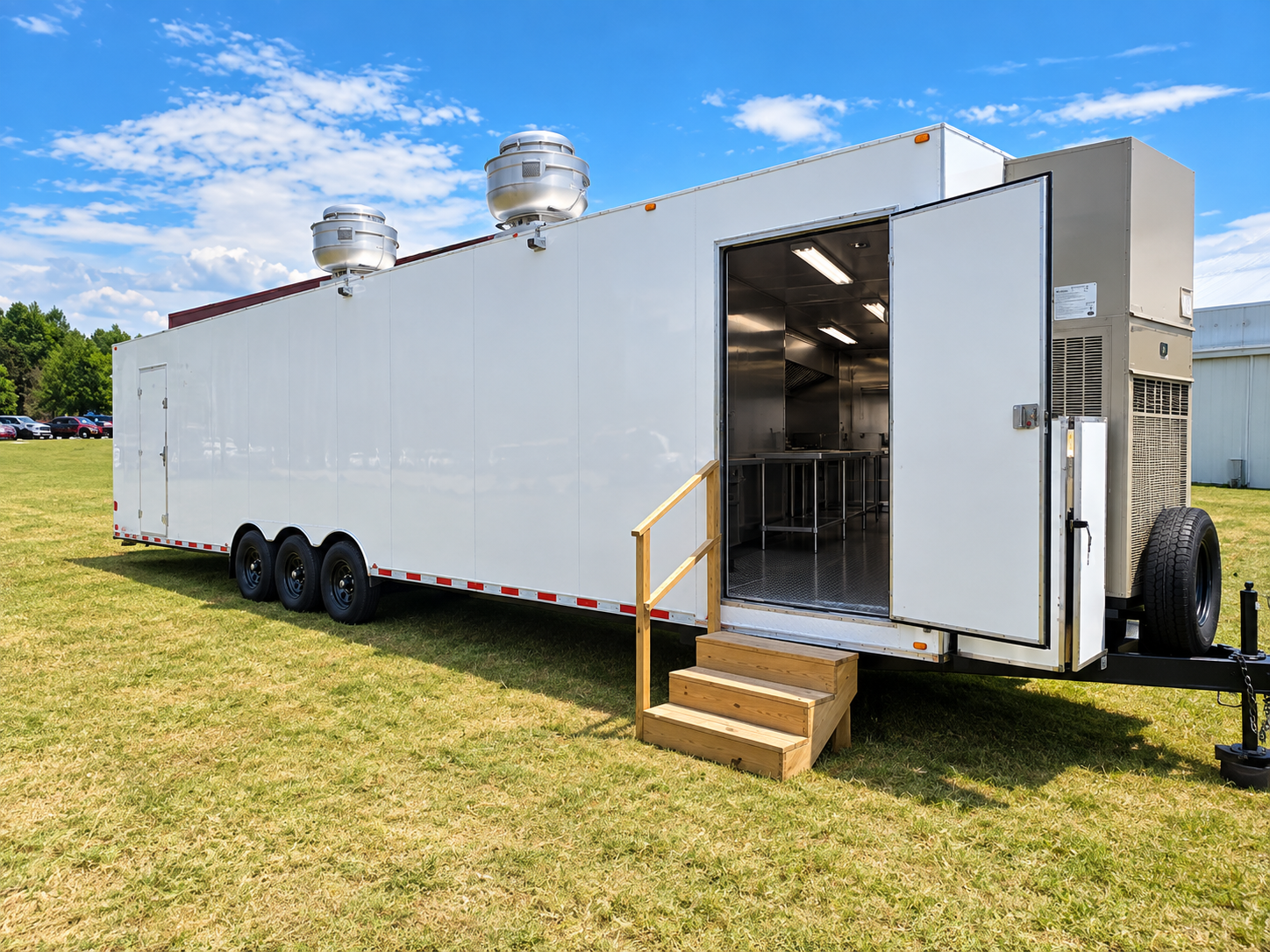
How many people need meals at each shift change, and where will food be served?
Use the answer to define a temporary cooking workflow before choosing trailer equipment or promising a service schedule.
What to work through before choosing a trailer.
These steps are specific to industrial sites. They help make a rental request useful while leaving exact equipment, delivery, approvals, and cost for a site review.
Plan by shift, not headcount
The number of workers on a project is different from the number eating in one service period. Document shift start and end times, meal breaks, service locations, and any overnight operation. Pair that schedule with a practical menu and staffing plan to discuss production needs.
Place the kitchen within site rules
Review heavy-vehicle routes, safety setbacks, visitor access, utility corridors, and a way to receive food supplies. Show where dining or pickup occurs relative to the cooking area. Site safety and facility teams must confirm whether the candidate location is usable.
Budget for changing phases
Crew size, project access, and available utilities can change as construction progresses. Record the expected phases and who can approve a move or schedule change. A rental inquiry should keep transport, setup, service support, and final charges open until the project details are reviewed.
West Virginia industrial site example
For an illustrative West Virginia maintenance project, a contractor might need meals near a plant while a large crew works alternating shifts. The first brief should state the exact site, shift counts, meal windows, proposed serving point, safe vehicle approach, and utility information. The example is a planning exercise and does not assert an existing West Virginia contract, a unit at the site, or delivery availability.
This example is hypothetical. It is not a claim of a completed project, local inventory, delivery timing, or approval in West Virginia.Details to bring to the first conversation.
The actual address and operating dates are essential. This list helps the team review whether a rental configuration and site plan are possible.
- Meal demand by shift
- Menu and service-point plan
- Industrial site access and safety contacts
- Power, water, wastewater, and exhaust needs
- Crew-size changes and rental window