
Commercial Kitchen Trailer Rental for School Kitchen Construction
School kitchen construction must be planned around a fixed student meal schedule and a campus that remains active. A commercial kitchen trailer rental may help a district evaluate temporary cooking, provided its menu, equipment, hood ventilation, placement, and handoff can work for the site. The food-service and facilities teams should document meal counts, serving locations, accessible routes, utilities, approvals, and the construction calendar before requesting a configuration.
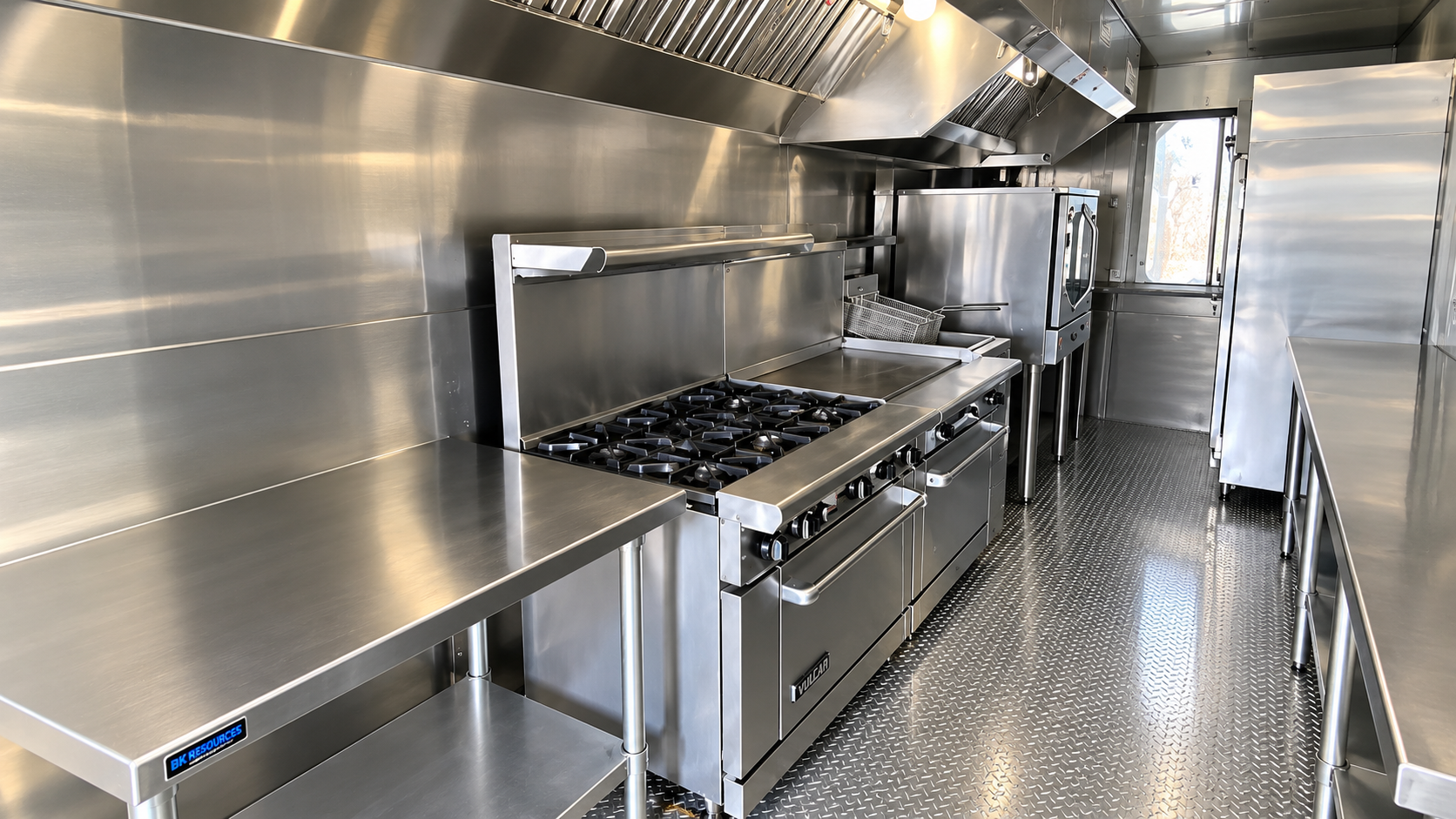
Where will meals be cooked, assembled, and handed to students during construction?
Use the answer to define a temporary cooking workflow before choosing trailer equipment or promising a service schedule.
What to work through before choosing a trailer.
These steps are specific to school districts. They help make a rental request useful while leaving exact equipment, delivery, approvals, and cost for a site review.
Map the school meal sequence
Record breakfast and lunch counts by day, menu cycle, preparation steps, holding needs, and the time allowed between cooking and service. Identify whether meals are served at one school or transferred to others. A trailer layout should be evaluated against that workflow rather than an abstract district enrollment number.
Protect student circulation
A proposed kitchen location must keep delivery vehicles, staff, construction crews, and students on clearly reviewed paths. Show entrances, pickup points, school bus movement, fire access, and utility connections on a campus plan. The district and applicable authorities decide what placement is acceptable.
Use breaks for transition work
School breaks may be useful for utility work, menu tests, staff orientation, and moving production, but construction timing can shift. List the intended transition milestones and a fallback meal arrangement. Confirm who is responsible for permits, inspections, transport, setup, and operation.
Hawaii school district example
For an illustrative Hawaii school renovation, a district might consider a temporary cookline while a campus kitchen is replaced. Its request should include the exact island and address, student meal counts, serving plan, campus access drawing, available utilities, and school-calendar milestones. Island-specific transport and site approvals require direct confirmation; this scenario is not an actual Hawaii installation or delivery promise.
This example is hypothetical. It is not a claim of a completed project, local inventory, delivery timing, or approval in Hawaii.Details to bring to the first conversation.
The actual address and operating dates are essential. This list helps the team review whether a rental configuration and site plan are possible.
- Student meal counts and menu cycle
- Cooking, holding, and serving locations
- Student, bus, and delivery routes
- Island address and utility capacity
- Construction, inspection, and school dates